
Interview with Ferdi B Dick: Emotional Avatars, Icons, and Release
Interview: Ferdi B Dick
(Exploring emotional states through animated avatars)
This Studio Q&A is a curated set of questions I’m often asked by collectors and curators, edited into interview form. It’s a practical guide to how I think about emotional avatars, the Lion’s Breath tongue motif as release, and why touch and reflection matter in the experience of my sculptures. If you’re considering a piece for a home, collection, or public setting, this is the clearest way into the work.
Q1. If someone has never seen your work before, what are you making, really?
I’m exploring emotional states through animated, symbolic avatars. I use familiar creature forms, exaggerated gestures, and a slightly mischievous tone so complex feelings feel approachable. The characters might look playful, but they are built to carry something real: tension, release, pride, vulnerability, stubbornness, calm. I like the idea that an artwork can make you smile first, and then quietly land a deeper truth.

Q2. You talk about icons and talismans. Why is that important to you?
I’m interested in the way icons work. Historically, sculptures weren’t only decoration, they were reminders. They held values, aspiration, protection, meaning. I’m reinterpreting that tradition by making contemporary talismans for everyday life. Not perfect bodies or distant myths, but emotional companions you can recognise instantly.
Q3. What do you want these works to do to a person in the room?
They’re designed to encourage a pause. A small moment where you breathe, soften your jaw, drop your shoulders, and return to the present. I’m after a Zen-like release, but without taking myself too seriously. It’s happy art with a twist: a reminder that letting go can be both profound and ridiculous.

Q4. Where did Lion’s Breath come from?
It’s personal. My grandfather loved going to Kruger National Park and lions were his favourite animal. One of his favourite things to do with us kids was to make a powerful growl. It felt like his way of connecting to us.

Q5. The tongue is a recurring motif. What does it mean in your work?
In the Lion’s Breath yoga pose, the tongue sticking out represents a powerful moment of release. It’s letting go of tension and arriving in a calmer, Zen-like state. In my work, that simple gesture becomes a symbol of release: a reminder to breathe, soften, and return to the present.
Q6. You also say you’re not aiming at political commentary here. Why?
With Lion’s Breath, I’m creating a breathing space, a reprieve from tension. I have not chosen to focus on political and social issues, because there is no shortage and it’s well documented by many artists. This body of work is more about letting go, alleviating stress, and healing from daily routine.

Q7. People touch the mouth in your sculptures. How did that become part of the work?
It’s a consistent, human response. When people encounter the open mouth, they instinctively touch it, almost like it’s a sacred object. That physical impulse turns viewing into a shared moment of connection. It breaks the invisible “do not touch” rule and turns looking into participation. Touch becomes a shortcut to connection, and connection is where the sculpture does its real work.

Q8: How do people typically react when they handle one of your crystal or stainless steel sculptures in person?
They’re almost always surprised by the weight. With crystal or solid stainless steel, there’s this instant sense of substance and quality. It feels precious and enduring like it’s built to outlast us. That physical solidity reinforces the idea of a lasting emotional icon, not something fleeting.

Q9. Tell me about Roar. What is a “roar” in your language?
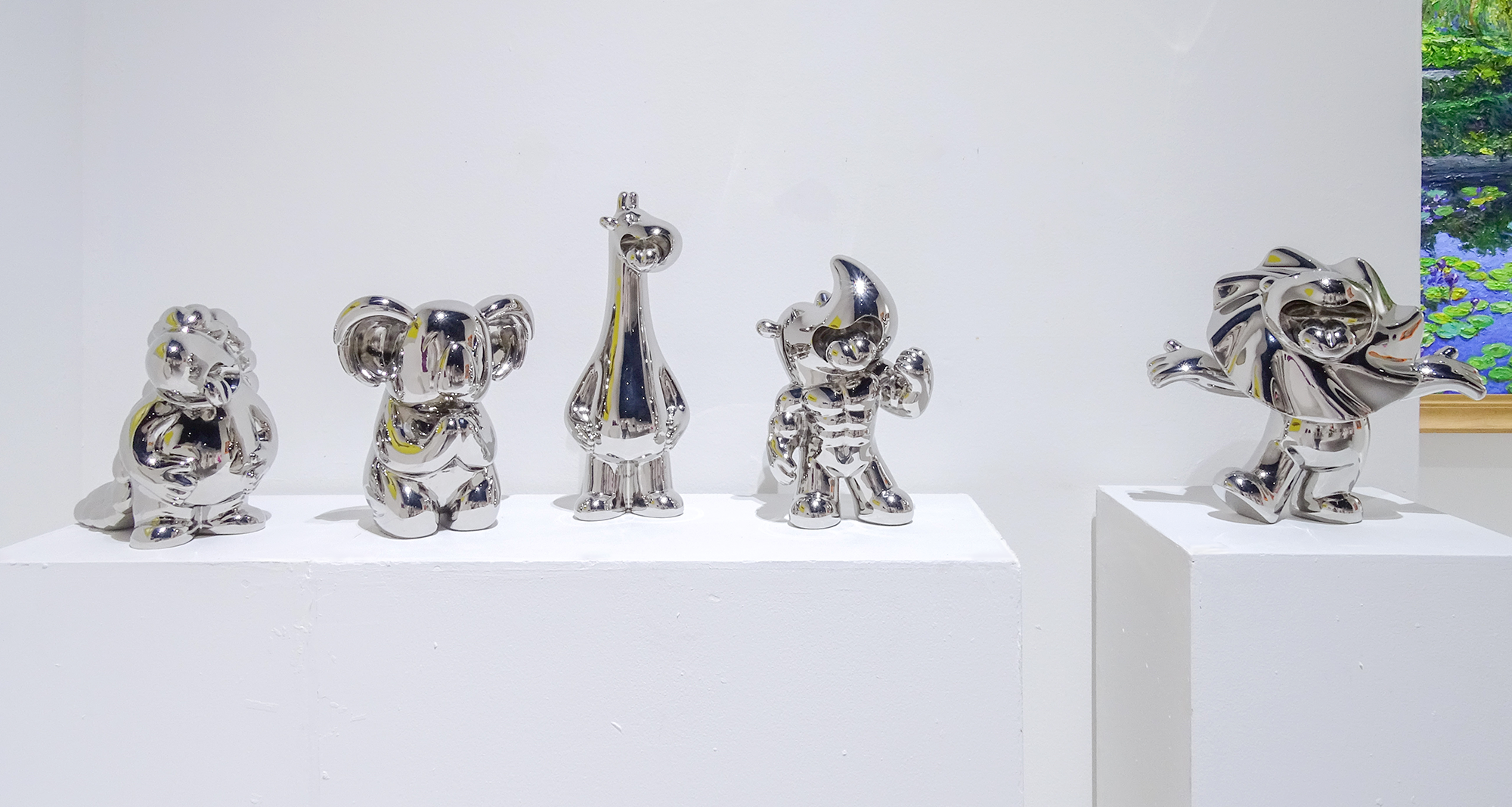
Roar began from an exhibition context in Thailand. The animals became more humanoid, leaning into the art-toy language that’s popular in Southeast Asia. Each sculpture works as an emotional avatar: human inside, animal outside. A “roar” is emotion made visible through posture, and yes, through the tongue-out attitude too.

Q10. Why mirror-polished stainless steel for the Roar series?
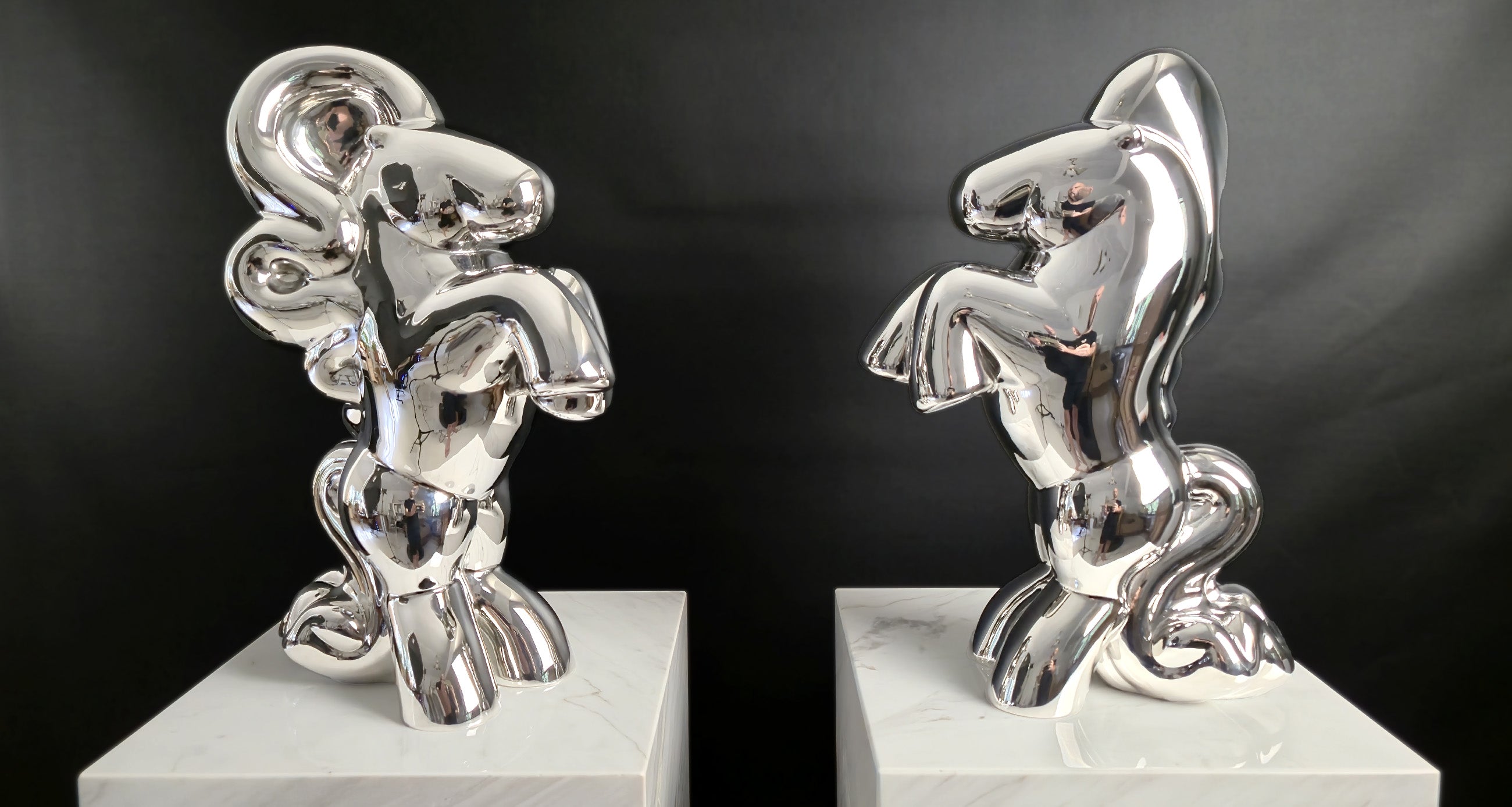
Because it includes the viewer. The Roar pose treats emotion as something performed and communicated, and the mirror-polished surface reflects the viewer into the work. You are literally in it, which makes the emotional read harder to keep at a distance.

Q11. You write very specifically about different emotional states (Pangy, Koala, Lion, and so on). Why name emotions through animals?
Because it’s a soft entry point. An animal lets you recognise something human without feeling accused. It gives you a way to say, “That’s me,” or “I’ve been there,” without having to explain yourself.

Q12. Dogs are a major theme in your work. Why do you keep returning to them?
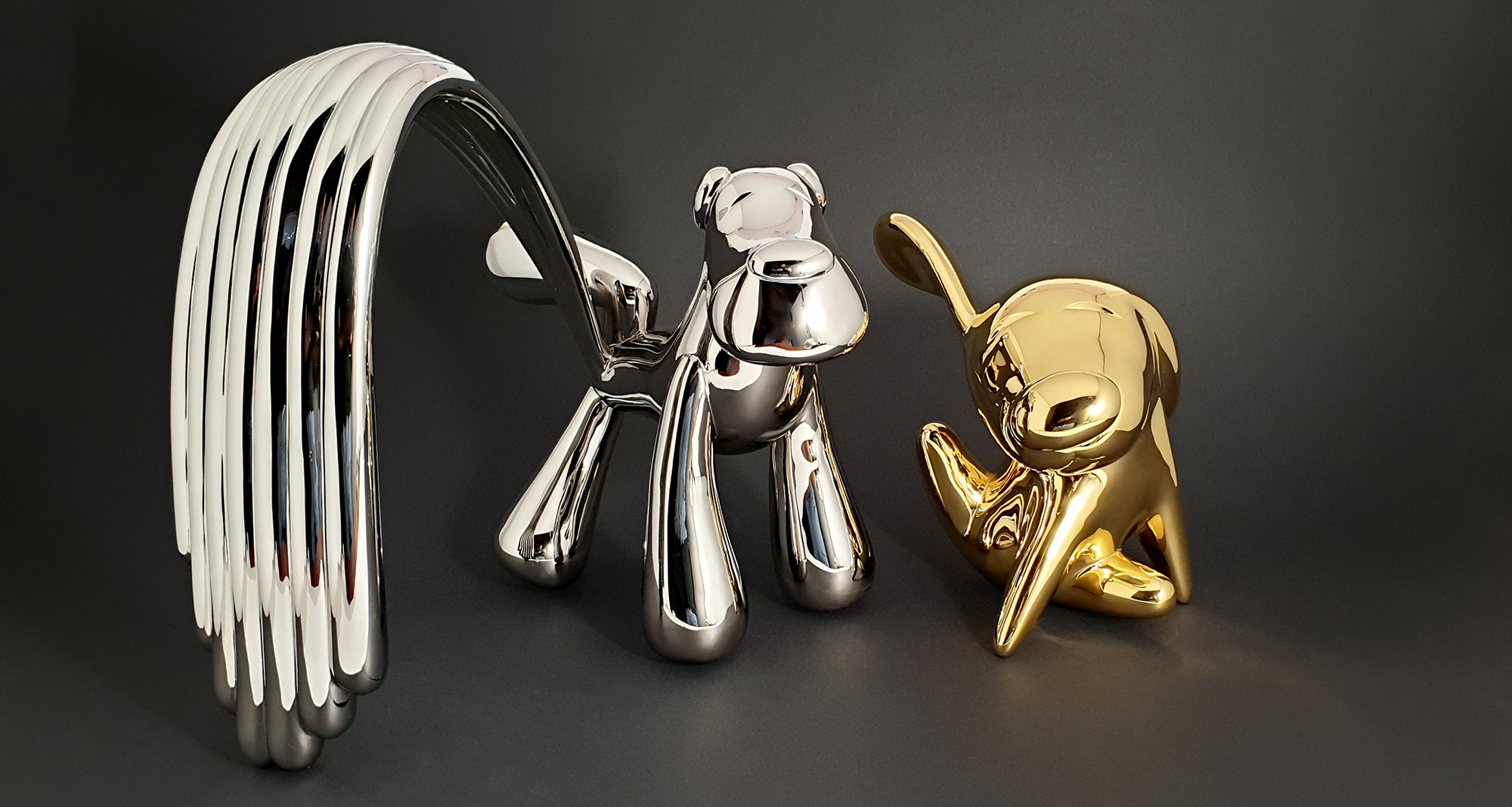
Dogs have never been “just pets” for me. They’ve been part of the rhythm of my life for as long as I can remember. This series is my way of honouring the tiny moments only dog people really notice. Not heroic poses, but the real stuff: the itch, the jump, the pull on the lead, the little rituals they perform every day. I try to catch the instant they feel most alive, when the body becomes pure intention. Each sculpture becomes a frozen slice of motion.

Q13. What do you hope a collector feels living with your work?
First, a smile. Then a small shift. A reminder to pause, to breathe, and to let the day loosen its grip. If the work becomes a focal point that gently changes the atmosphere of a space toward ease, then it’s doing what I made it to do.
%0AThis%20Studio%20Q%26amp;A%20is%20a%20curated%20set%20of%20questions%20I%E2%80%99m%20often%20asked%20by%20collectors%20and%20curators,%20edited%20into%20interview%20fo...)